
01
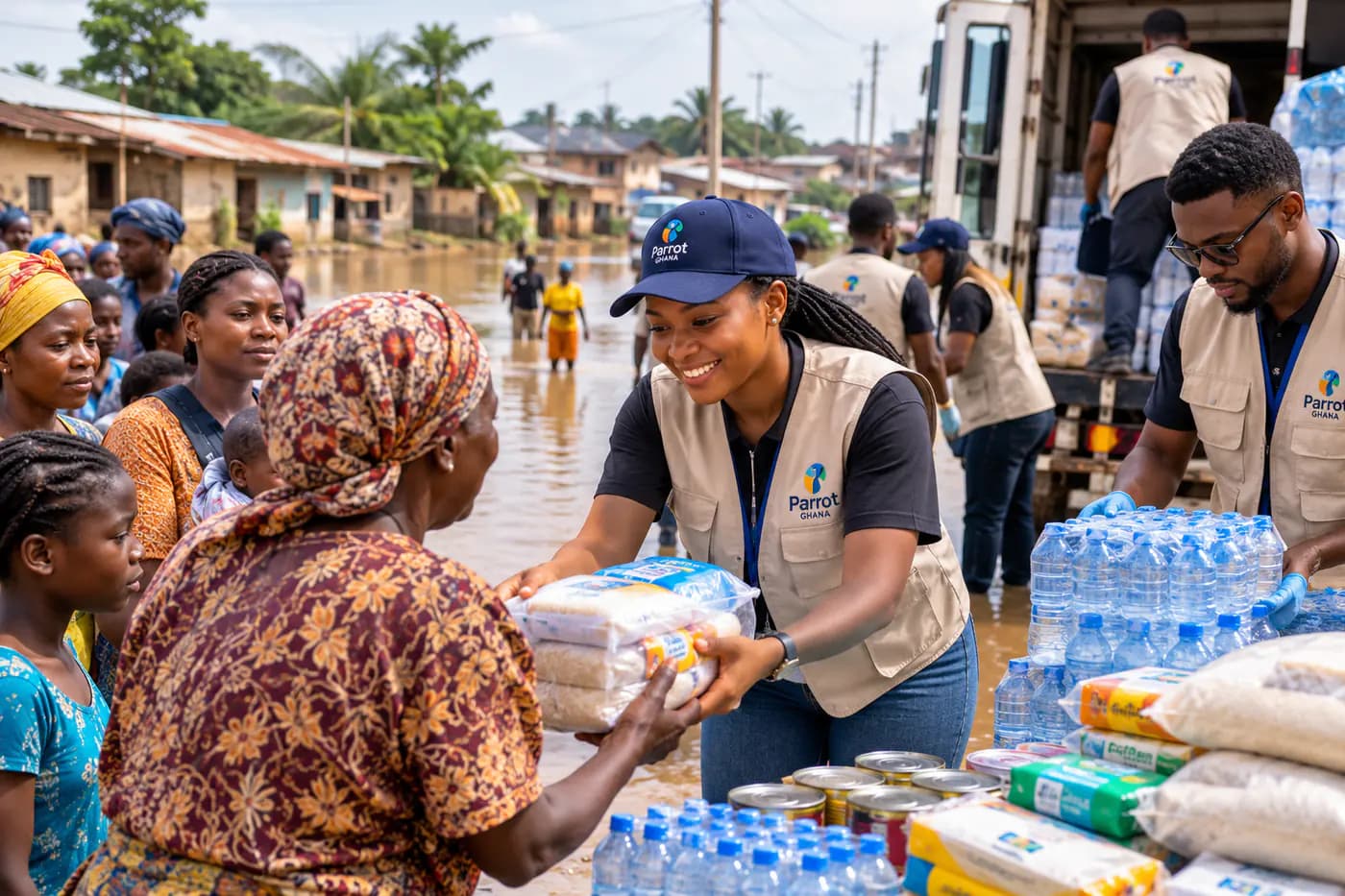
Respond
Relief, shelter, supplies and urgent coordination.
Programmes
Parrot Ghana's programme structure covers immediate response, psychosocial care, recovery support, disaster preparedness, community resilience and advocacy.
Support begins by listening carefully, understanding the need and communicating with care.
Local knowledge shapes how relief, volunteers and partners are mobilised.
Each response should leave room for recovery, preparedness and climate awareness.
Programme map
01
Relief, shelter, supplies and urgent coordination.
02
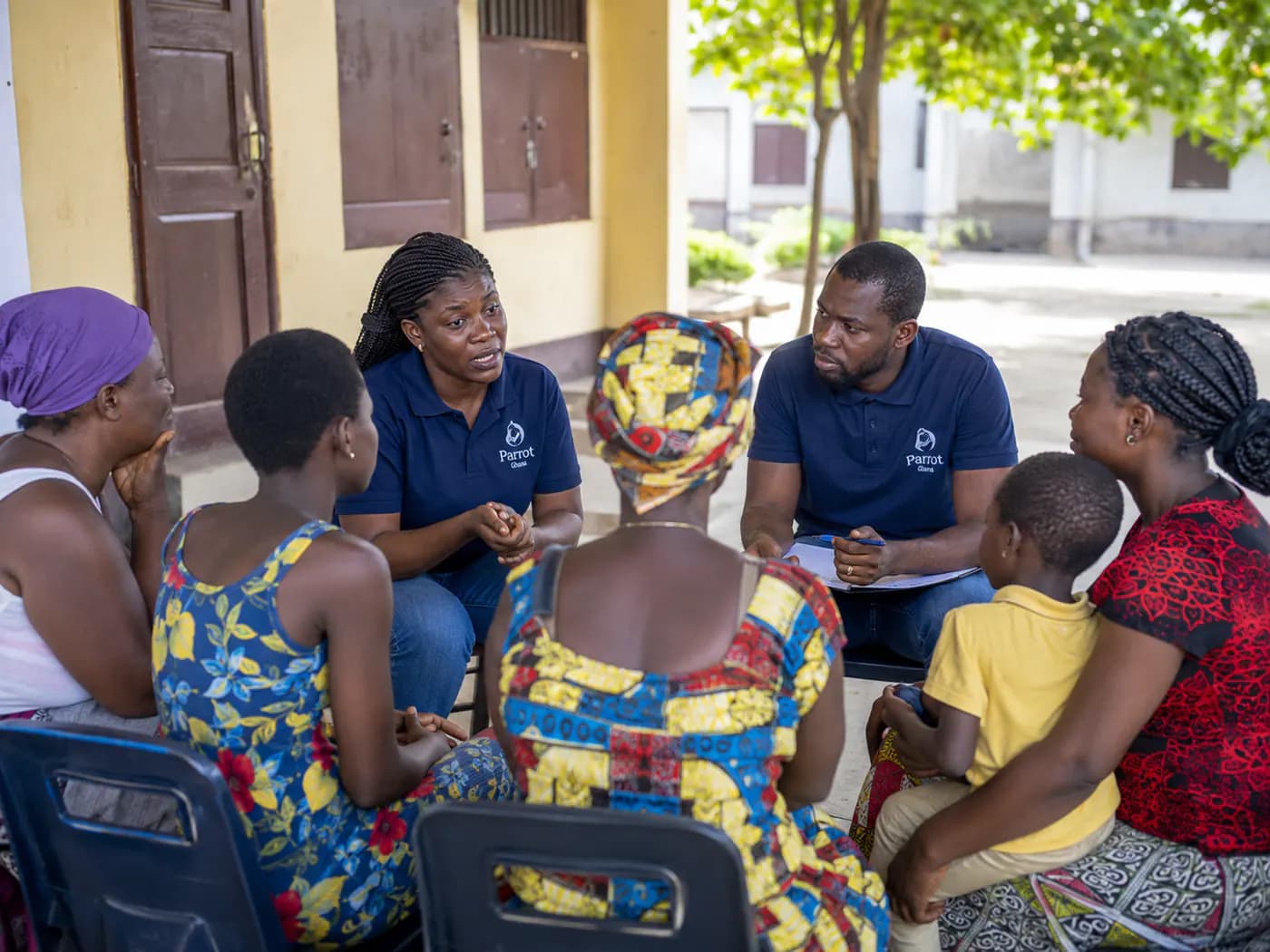
Psychosocial care, rebuilding and practical support.
03
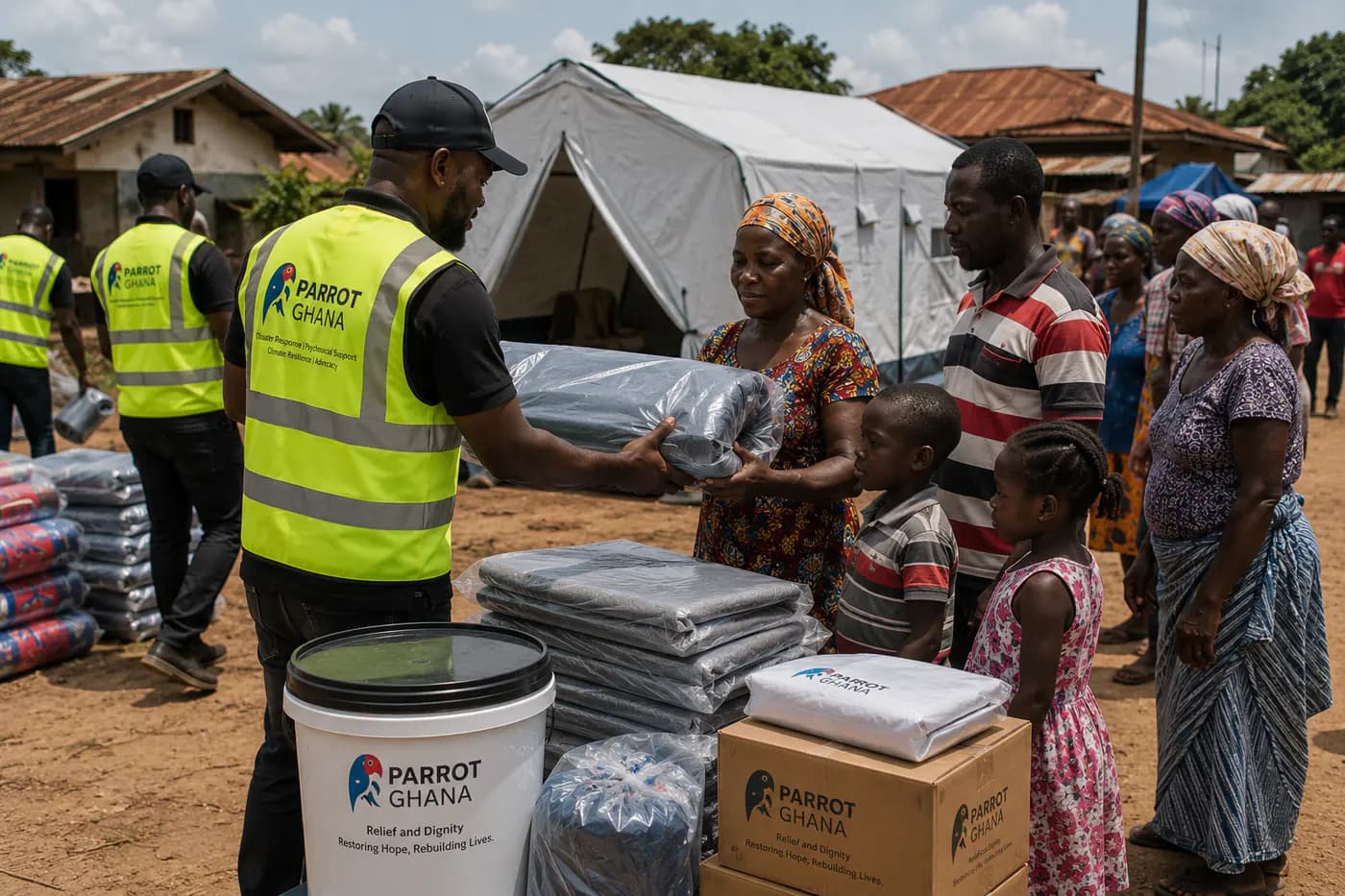
Training, climate action and local resilience.
Programme areas
Rapid coordination of food, clean water, temporary shelter and essential relief items after floods, fires, storms and other emergencies.
Trauma-informed emotional support, referrals and community sessions for people affected by disaster.
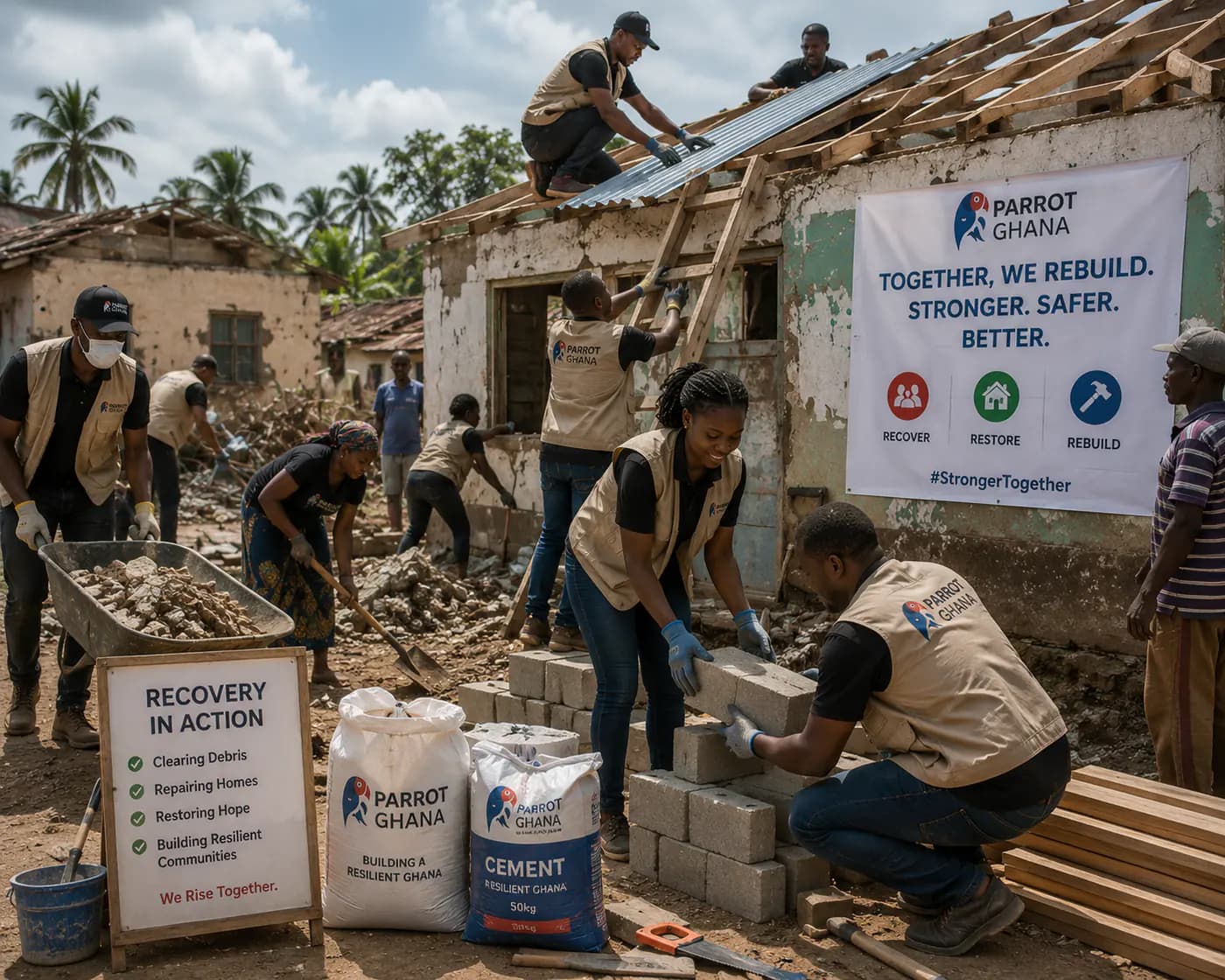
Longer-term support that helps families, livelihoods and communities move from emergency response into recovery.
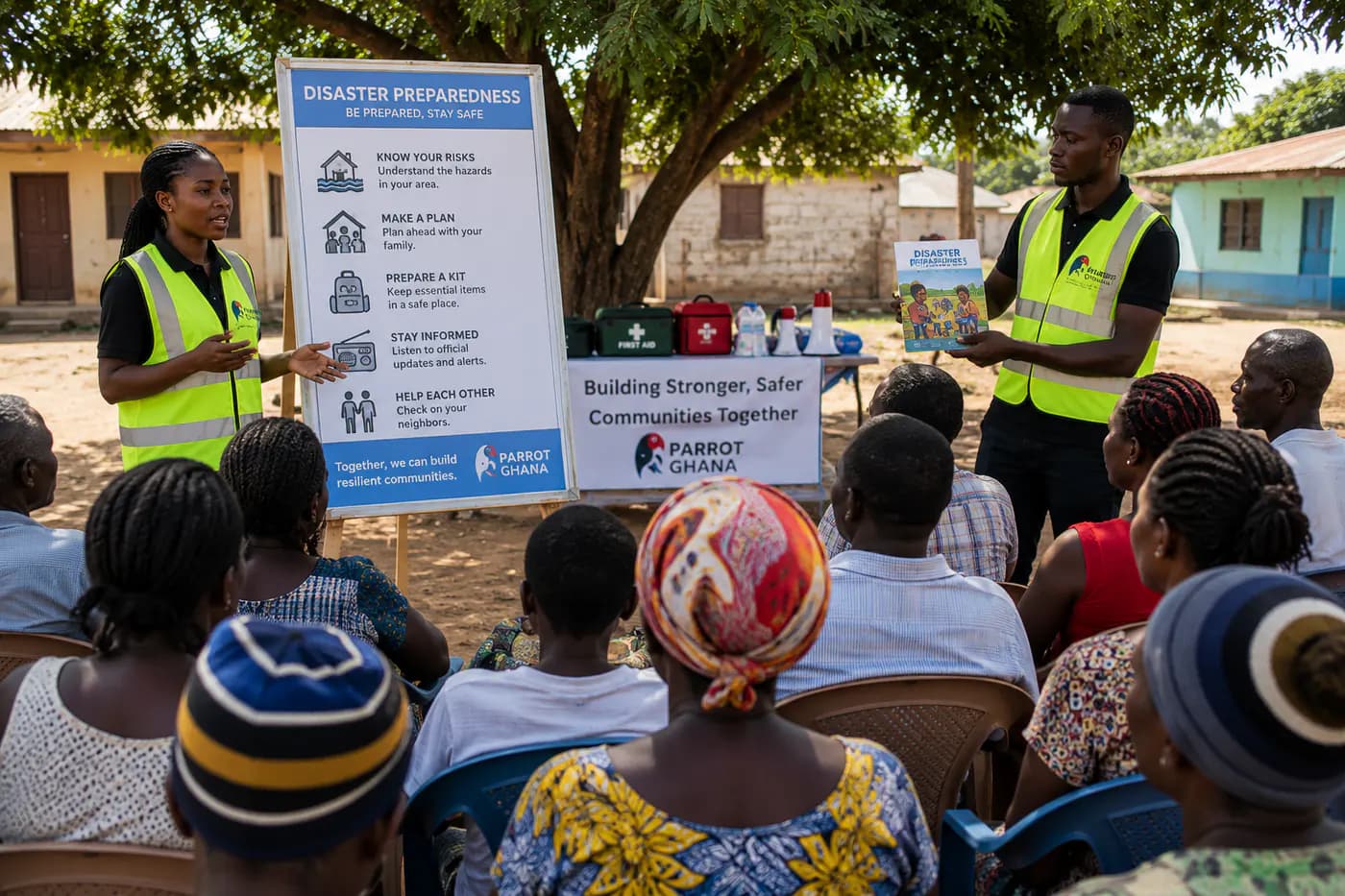
Education, local readiness and practical preparedness work to reduce avoidable harm before disasters happen.
Partnership-led programmes that strengthen local capacity and protect vulnerable households.
Public-interest advocacy for safer communities, stronger preparedness and protection for disaster-affected people.
Prepare
Built into every programme conversation.
Respond
Built into every programme conversation.
Recover
Built into every programme conversation.
How the work moves
The same response model supports urgent appeals, support requests, volunteer mobilisation and public updates.
Each stage helps the team stay organised and people-centred.
Each stage helps the team stay organised and people-centred.
Each stage helps the team stay organised and people-centred.
Each stage helps the team stay organised and people-centred.
Each stage helps the team stay organised and people-centred.
Each stage helps the team stay organised and people-centred.
Work with Parrot Ghana